Skip Navigation
Skip Main Content

Bergen County's Multi-Discipline Spine Specialists

Answers for Your Low Back Pain & Sciatica

Low back pain is one of the most common reasons people miss work, give up activities they love, and feel like their body has turned against them. For some, it's a dull ache that never fully goes away. For others, it's sharp, sudden pain that makes even simple movements feel impossible. And when the pain travels down into the legs, that's often a sign that something more specific is going on: sciatica.Sciatica happens when the sciatic nerve — the longest nerve in the body — becomes compressed or irritated. It runs from the lower spine through the hips and buttocks and down each leg. When it's under pressure, you might feel a burning or electric sensation, numbness, tingling, or weakness anywhere along that path.Joint & Spine was founded in 1995 with one mission: to specialize in the non-surgical treatment of low back pain and sciatica. Dr. Alfred Gigante has spent over 50 years treating these conditions and has helped more than 20,000 different patients get their lives back.

50+Years of experience
20,000+Patients helped
1995Founded
Appointments
Low Back Pain & Sciatica

What's Actually Causing Your Low Back Pain?

Common Causes of Low Back Pain & Sciatica

Low back pain and sciatica are symptoms, not diagnoses. Understanding what's actually causing your pain is the first step toward treating it effectively. At Joint & Spine, we start every patient relationship with a thorough evaluation so we know exactly what we're dealing with before recommending any treatment.
Disc

Herniated & Bulging Discs

The discs between your vertebrae act as shock absorbers, but they can break down over time or become damaged from injury or strain. When a disc herniates, the soft inner material pushes out through the outer layer. If that material contacts a nearby nerve root, including the sciatic nerve, it can cause significant pain that radiates into the legs. Bulging discs put similar pressure on surrounding structures without fully rupturing. Both conditions respond well to spinal decompression and chiropractic care.
Disc

Degenerative Disc Disease

As we age, the discs naturally lose some of their height and hydration. This reduces the cushioning between vertebrae and can create bone-on-bone contact, increased pressure on nerve roots, and chronic inflammation. Degenerative disc disease is one of the most common causes of persistent low back pain in adults over 40, and it often coexists with sciatica. Our VPADD technique was specifically developed by Dr. Gigante to address disc degeneration and its effects on the surrounding nerves.
Structural

Spinal Stenosis

Spinal stenosis is a narrowing of the spinal canal that puts pressure on the nerves running through it. It's more common in older patients and tends to cause pain that worsens with standing or walking and improves with sitting or bending forward. Both lumbar and cervical decompression therapy can be highly effective for stenosis patients.
Joint

Spondylosis & Facet Joint Degeneration

Spondylosis refers to the general wear and arthritis-like changes that occur in the spine over time. The facet joints, which connect the vertebrae to each other, can develop their own inflammation and degeneration, contributing to stiffness, localized back pain, and nerve irritation. Chiropractic adjustments, physical therapy, and regenerative treatments like PRP therapy can all play a role in managing these conditions.
Joint

Sacroiliac Joint (SI Joint) Dysfunction

The sacroiliac (SI) joint connects the base of your spine (sacrum) to your pelvic bones (ilium) and plays a critical role in absorbing shock and transferring forces between your upper body and legs. When this joint becomes inflamed, misaligned, or unstable, it can cause significant lower back, buttock, or leg pain that is often mistaken for sciatica or disc problems.We effectively treat SI joint pain and dysfunction with targeted chiropractic care, manual therapies, and corrective exercises to restore proper alignment, reduce inflammation, and relieve your discomfort.
Soft Tissue

Muscle Strain & Soft Tissue Injury

Not all low back pain originates in the spine. Muscle strains, ligament sprains, and trigger points in the soft tissue around the lower back can cause significant pain that mimics disc or nerve-related conditions. Pressure point therapy, active cupping, and shockwave therapy are particularly effective for these kinds of soft tissue issues.
Nerve

Piriformis Syndrome & Sciatic Nerve Compression

Sometimes the sciatic nerve becomes compressed not in the spine but in the deep muscles of the hip, particularly the piriformis muscle. This condition, called piriformis syndrome, produces sciatica-like symptoms and is often misdiagnosed. A thorough evaluation by our team will identify whether your leg pain is coming from the spine or from a peripheral compression point, since the treatment approach differs.
Not sure which applies to you?Our $59 Community Screening includes a full evaluation and digital X-rays.Book a Screening →

How We Approach Non-Surgical Low Back Pain Treatment

What Treatment Looks Like at Our Clinic

There's no single treatment that works for every patient with low back pain or sciatica. The best approach depends on what's causing your pain, how long you've had it, your overall health, and how your body responds to care. What we can promise is that your plan will be built specifically for you, based on a real evaluation, not a template.
01

Spinal & Vertical Decompression

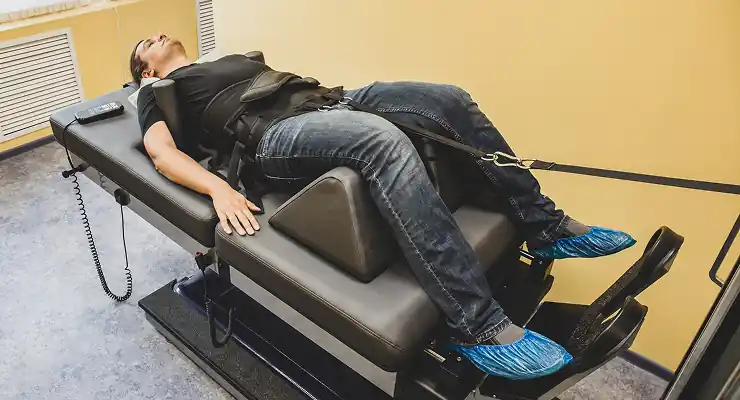
For patients with disc-related pain, spinal decompression is often the cornerstone of care. By gently stretching the spine, decompression creates negative pressure inside the affected disc, drawing it away from the nerve it's been irritating and allowing nutrients and fluids to re-enter the disc tissue so it can heal. Most patients begin feeling relief within the first five sessions.Dr. Gigante's VPADD technique takes this further by applying decompression in a vertical position, working with the natural axis of the spine rather than against gravity. This allows the body to be guided into positions that horizontal traction can't replicate, and for many patients it produces better results. It's one of the things that makes Joint & Spine genuinely different from other clinics.
02

Chiropractic Adjustments

Chiropractic care restores proper alignment to the joints of the spine, relieving pressure on nerves and improving the way the spine moves and functions. For patients with low back pain and sciatica, regular adjustments reduce nerve irritation, decrease inflammation, and help the body maintain the improvements made through decompression and physical therapy. Chiropractic care is safe, effective, and one of the most well-researched treatments available for spinal pain.
03

Physical Therapy

Physical therapy addresses the muscular side of low back pain. Weak core muscles, tight hip flexors, and poor movement patterns all contribute to back pain and make it more likely to return after treatment. Our physical therapists work with each patient to rebuild the strength and flexibility that supports the spine and pelvic floor, reducing the risk of future flare-ups and helping patients stay active long term.
04

Pain Relief Therapies

For patients dealing with significant inflammation, muscle tension, or nerve-related pain alongside their disc or joint issues, we offer a range of targeted pain relief therapies:
  • PEMF Therapy supports healing at the cellular level.
  • Active Cupping breaks up adhesions and improves circulation in soft tissue.
  • Pressure Point Therapy releases trigger points that refer pain into the low back and legs.
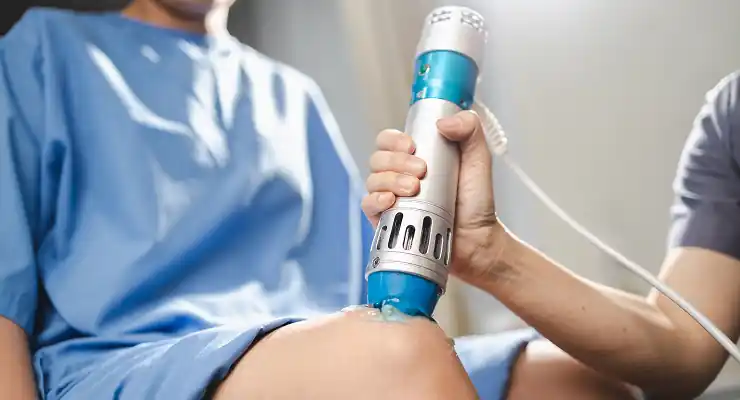
  • Shockwave Therapy is particularly effective for chronic soft tissue pain that has been resistant to other approaches.
05

Regenerative Medicine

When standard treatments aren't enough, or for patients with more advanced degeneration, regenerative medicine offers a way to address tissue damage more directly:
  • PRP Therapy concentrates your body's own growth factors and injects them into the damaged area to accelerate healing.
  • Human Cellular Tissue Therapy introduces powerful regenerative signals from umbilical cord-derived cells to stimulate repair of disc and joint tissue.
  • Laser Therapy and Pulse Therapy support these processes non-invasively, reducing inflammation and encouraging cellular regeneration throughout the course of care.

Frequently Asked Questions

What is sciatica and how do I know if I have it?

Sciatica is pain caused by irritation or compression of the sciatic nerve, which runs from the lower spine through the hips and down each leg. The most common symptom is a burning, shooting, or electric pain that travels from the lower back or buttock into one leg, sometimes reaching as far as the foot. You might also experience numbness, tingling, or weakness in the leg. Sciatica is usually felt on one side of the body. If you're experiencing any of these symptoms, our team can evaluate you and determine whether sciatica is the cause.

Can low back pain and sciatica be treated without surgery?

Yes, and for the vast majority of patients they should be. Did you know that 99% of patients receiving surgery are never told to try spinal decompression first? Surgery carries real risks and is appropriate only when conservative treatments have been exhausted or when there's a serious neurological emergency. Most cases of low back pain and sciatica, including those caused by herniated discs, degenerative disc disease, and spinal stenosis, respond well to non-surgical care.

Spinal decompression, chiropractic adjustments, physical therapy, and regenerative treatments have helped thousands of patients find lasting relief without going under the knife. At Joint & Spine, non-surgical treatment is our specialty and has been since 1995.

How long does it take to recover from low back pain and sciatica?

Recovery time varies depending on the cause and severity of your condition, how long you've had it, and how consistently you follow your treatment plan. Many patients begin to feel meaningful improvement within the first few visits. More complex or chronic cases may take several weeks to months to fully resolve. The key is getting an accurate diagnosis early and starting the right treatment rather than waiting and hoping the pain goes away on its own. Our team will give you a realistic picture of what to expect during your initial evaluation.

How do I get started with low back pain treatment near me?

Getting started with Joint & Spine is easy! You can request an appointment online or call or text us at (201) 445-1079. If you're not sure whether your condition can be treated, our $59 Community Screening is a great first step. You'll receive a full evaluation and digital X-rays so we can assess what's going on and what your options are.

We look forward to seeing you!

Get the Specialized Care for Back Pain You've Been Looking For

Proven Care for Back Pain Since 1995

Appointments