Spinal stenosis is a condition in which the open spaces inside the spine become narrowed, leaving less room for the spinal cord and the nerve roots that branch off it. The word "stenosis" simply means narrowing. When that narrowing becomes significant enough, it can create pressure on nerves and lead to pain, tingling, numbness, or weakness.
Spinal stenosis most commonly develops in the lower back (lumbar spine) and the neck (cervical spine), though it can occur in any region of the spine. It tends to develop gradually over time, which means symptoms often come on slowly rather than all at once. Many people are diagnosed in middle age or later, though it can affect younger individuals as well.
An important thing to understand is that narrowing visible on an imaging scan does not automatically cause symptoms. Many adults have some degree of stenosis on an MRI and feel little to no discomfort. What matters is whether that narrowing is actually affecting nerve tissue in a meaningful way.
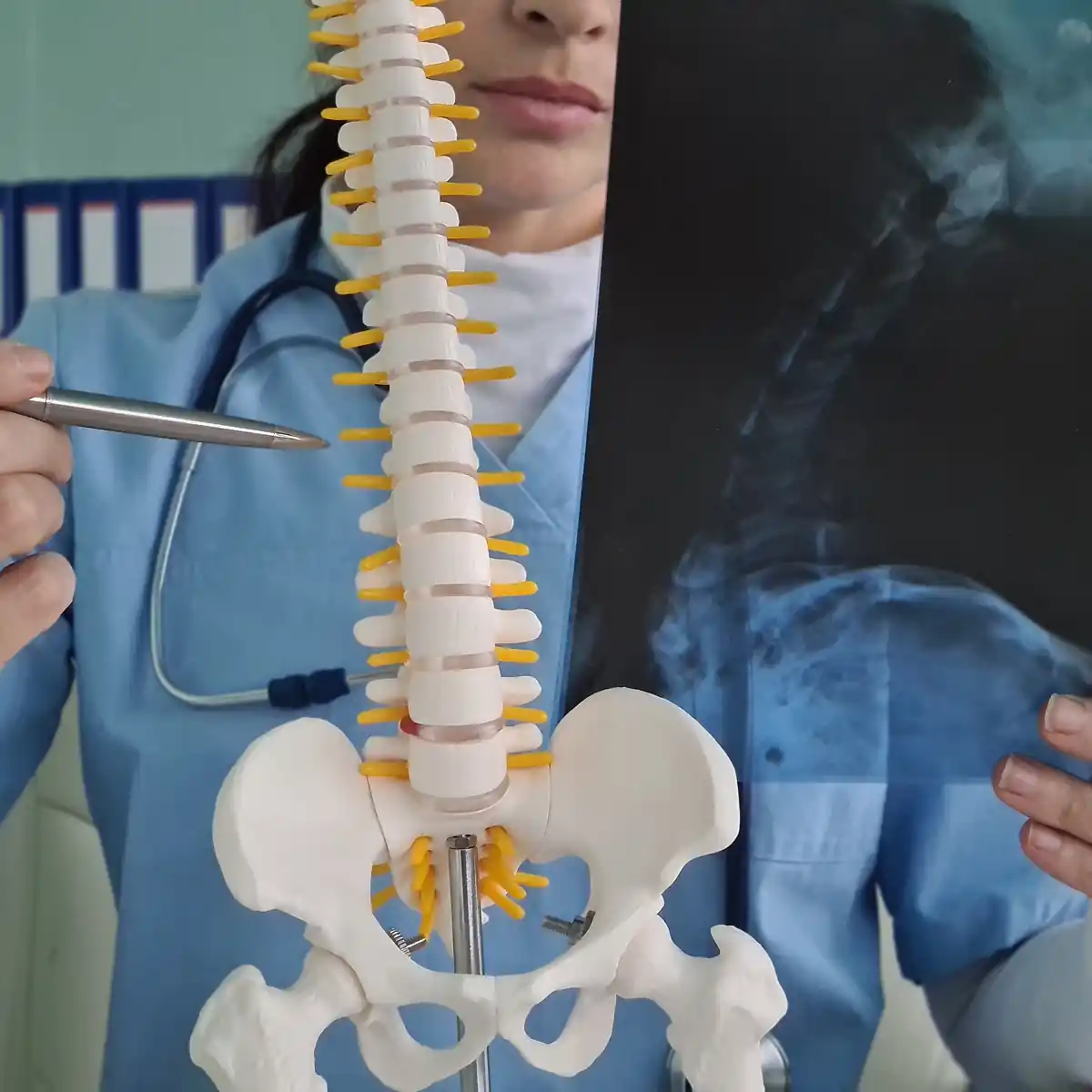
The spine is a column of stacked bones called vertebrae. Running through the center of these bones is the spinal canal, a protective tunnel that houses the spinal cord and the nerve roots that branch off it. These nerves exit the spine through small openings between vertebrae called foramina and travel to the arms, legs, and other parts of the body.
When the spaces in this system are adequate, nerves have plenty of room to pass through without interference. When those spaces shrink, nerves can become compressed or irritated, and symptoms begin.
Clinicians often describe stenosis by where in the canal the narrowing is occurring:
Each type can produce slightly different symptoms depending on which nerves are being crowded.
Spinal stenosis is most often the result of gradual, age-related changes in the spine. The spine handles decades of movement, load, and stress, and over time, the tissues that support it can change in ways that reduce available space for nerves.
Symptoms vary depending on which region of the spine is affected and how significantly the nerves are being compressed.
In the lower back, common symptoms of lumbar stenosis include:
This pattern of leg symptoms with standing and walking that improves with sitting is called neurogenic claudication, and it is a hallmark feature of lumbar spinal stenosis.
In the neck, cervical stenosis symptoms may include:
Spinal stenosis always gets worse over time. For many people, symptoms remain stable for years, and some individuals experience improvement. Stenosis does not follow a single, predictable course for everyone.
If I have stenosis on my MRI, I must have severe symptoms. Many people have significant stenosis on imaging with no symptoms at all. Imaging findings must be matched to what a person is actually experiencing.
Stenosis only affects older people. While it is more common with age, younger individuals can develop stenosis, particularly if they were born with a naturally narrow canal or have experienced significant spine injury.
Leg pain while walking always means stenosis. Leg pain with walking can have several causes, including vascular conditions. A thorough evaluation helps determine the actual source.
Diagnosis begins with a detailed health history. Describing your symptoms clearly, including what makes them better or worse and how they change with posture and activity, is one of the most valuable pieces of information a provider can use.
A physical and neurological examination will typically assess:
Imaging is essential for confirming stenosis. MRI is the most informative choice, as it shows soft tissues, discs, and nerve structures in detail. X-rays can reveal bone changes such as spur formation or loss of disc height. A CT scan may be used when MRI is not available or appropriate.
As with other spine conditions, imaging results need to be evaluated alongside your physical findings and symptom history to be clinically meaningful.
You should seek evaluation if you notice:
Seek immediate care if you experience:
These symptoms may indicate compression of the cauda equina, a serious condition requiring urgent evaluation.